First Impressions of the Jamahl Mosley hire
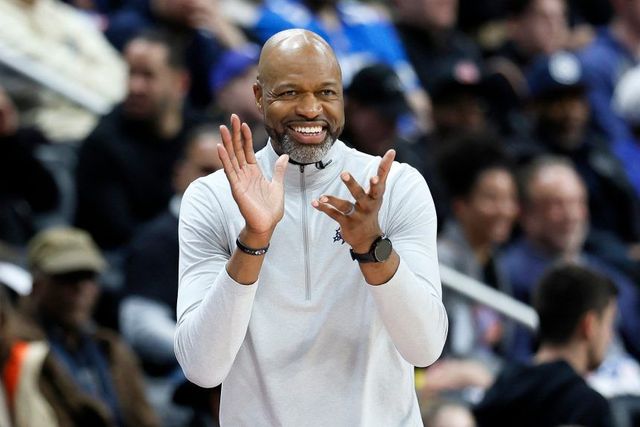
My initial reactions & thoughts on the Pelicans new hire -- Head Coach Jamahl Mosley.
Yesterday, the New Orleans Pelicans hired Jamahl Mosley, the former Orlando Magic coach, as their new head coach.
The name that has been tied to this front office since the beginning of the season, when Willie Green was fired.
Jamahl Mosley is a defensive difference-maker, and he established that during his time with the Magic, making it the team’s calling card.
Mosley’s instilled identity was apparent in the Magic’s round one matchup, taking the Pistons to seven games in a series most thought they had no business being in.
Unfortunately, Magic Brass believed that Mosley had taken them as far as he could. It was time for a fresh face in the building. The writing was on the wall after an abysmal Play-In showing and presser comments from Paolo Banchero indicated Mosley’s relationship with him had clearly soured.
Joe Dumars and Troy Weaver got their guy, whom they’d been eyeing for almost the entire season.
The news the fanbase was clamoring for is here. It was announced during a Monday meeting at work, and many in my circle reached out for my thoughts—naturally, I have a lot to say.
Let’s deblur the fanbase’s reactions, discuss what we should expect from Jamahl Mosley this coming season, the merits, and the concerns.
Coming Down to Earth
I myself need the reminder too, but let’s reel it back in on this hire and talk about what’s real.
The Pelicans were never getting the next Joe Mazzulla-level coach, meaning a shrewd, next-up assistant like Charles Lee whom the Hornets hired last year, or Sean Sweeney1 was never walking through that door for as little as an interview.
Rajon Rondo was up for consideration, and that was an amusing concept — but that experiment could’ve been horrendous. Not to say that Rondo will never be a good NBA coach. Let’s face it, Rondo was a genius player… an extremely volatile one, too, and his league reputation is said to be unreliable.
Meaning, Rondo, taking this as a first-time head coach and hardly ever working as an assistant — though he has unquestionable experience as a player — would have been a steep climb to success. A stall full of decorated assistant coaches would not only have been needed but required with Rondo at the helm. This is especially true with the Pelicans’ inconsistency and two-timed roster.
It wasn't Steve Hetzel, who also would have been a first-time HC.
It wasn’t James Borrego; many fans are rejoicing, though I believe Borrego deserved real burn as a head coach.
AND IT WASN’T DARVIN HAM!
Sorry, I felt I needed to get that off my chest.
This front office wanted a guy to carry out and align with (maybe even cater to) their vision — a fairly normal concept in this NBA process. Jamahl Mosley is that guy, and he’s likely the most experienced candidate.
What Jamahl Mosley isn’t is an innovative, shock-and-awe-type hire. That isn’t directly a bad thing,
Some folks may think that the Pelicans’ new coach, like Willie Green, is a defensive-minded, culture-setting leader who ultimately lost his locker room.
However, clarifying the comparison, while both are known for defense-first approaches and locker room leadership, Mosley’s tenure in Orlando included building a team identity that repeatedly produced top defensive results, which distinguishes him as a candidate.
If the front office is just bringing in another Green, I’d argue Mosley is closer to addressing the right issues than someone who will reopen old wounds.
Grouping Mosley with Green overlooks context and coaching nuance. While surface similarities exist, Mosley is known among NBA circles for his adaptability and the respect he commands from players, which could set him apart from Green’s tenure.
Mosley is widely respected among NBA players, and many people within or covering the Magic have done nothing but sing his praises. Their records might be similar, and they’ve both been dealt injury-prone rosters in the past; it’s worth noting that Mosley built tangible, sustained defensive success in Orlando.
What to Expect
What the Pelicans need is someone who has proven to bring inherent value to a situation.
I’ll continue to drive my point home because that’s what Jamahl Mosley did with the Orlando Magic — establishing a tactical intensity and grit in his tenure, making the defensive end the center of their identity.
Jamahl Mosley’s area of expertise is a major hole in the Pelicans’ ability over the last two years — finishing 23rd in defensive rating in 2026 and 29th in 2025.
An expectation of growth on that end of the floor is a given, but with different personnel and roster context, will Mosley be able to instill the same habits and effective principles that he did with his former team?
Yes, this defensive identity will be instilled, but do the Pels have the personnel to carry it out? Not exactly. If Mosley can squeeze every drop out of this team’s defensive capabilities and put them in the middle of the pack or right above it — I’d consider that a win.
In the Mosley era, the Magic’s predominant focus was playing hard-nosed defense with intention. Aggressive help concepts, blowing up ball-screens by fighting through them, being energy-centric with an emphasis on quality transition defense, and forcing turnovers at a high clip were their bread and butter.
It’s what allowed them to be top three in defensive rating in the 2024 and 2025 seasons, highlighted by limiting second-chance opportunities and an astonishing amount of forced turnovers.
In the last season, the Magic remained effective but dropped to just outside of the top 10 in those categories. There was a definite contrast between the two incredible years prior and this last season.
Some of it could be attributed to the human factor of Mosley’s motivation growing stale. Turnover from the Desmond Bane trade and the absence of Franz Wagner/inconsistent lineups available also contributed.
Now, Jamahl Mosley has an entirely different roster in front of him, with different assets and strengths. The versatile, switchable Orlando defense is no longer his hand dealt. What he does with a more flawed roster in that regard will be the major talking point next season.
The Pelicans’ main point of emphasis when asked about their defensive woes was an inability to limit their opponents’ second-chance opportunities. They ranked 28th in opponents’ offensive rebound percentage. With a defense that already struggles for stops, you cannot afford to miss on closing out possessions.
Leading me into what I anticipate from Jamahl Mosley’s rotations in New Orleans, if the frontcourt remains the same, Yves Missi should see the most playing time.
Missi poses as the Pels’ best rebounder and defensive anchor and has had major flashes of proficiency in those areas. He’s the most versatile defensively. That will allow Mosley to accomplish what he sees fit in terms of ball-screen coverages next year.
Speaking of ball-screens, arguably the biggest Pelicans pet peeve of mine was the senseless and leisurely switching.
Switching isn’t the issue; it’s the lack of pressure and contact initiated during switches, re-screening, and dynamic actions. Handing off your man without force or disruption is an easy way to give you easy buckets.
My question, especially after watching game one of the Western Conference Finals, is: how will Mosley implement the modern NBA trend of aggressive pressure and forcing opposing offenses to work to get into their actions and execute them? This will be important with trickier personnel — Herb Jones and Dejounte Murray can accomplish that, but the rest of the guard/wing room is a question mark.
The Pelicans don’t have an incredibly switchable roster like the Magic. I’ll be curious to see if there’s a philosophy change based on the roster or if the Pelicans will remain switching but be more deliberate in their approach.
Another component I’ll be keying in on is transition defense.
Empty possessions were another momentum killer for the Pelicans last season. As a result, they were 6th-worst in opponent transition frequency and 9th in points per possession allowed. In years past, Mosley obviously put an emphasis not only on limiting transition but also on covering it.
Whatever defense leaps are made will be a testament to Mosley’s coaching impact. I firmly believe there will be genuine development in that department, though the same goes for a lack of it.
Jamahl Mosley is a proven hire. The Pelicans have an uphill battle ahead of them to achieve what this front office has set out for them in terms of winning next year.
All things considered, Mosley is a good hire given the context and options — and maybe the potential disaster that could have been before the Pelicans.
The introductory presser for their new hire is a week from today. I’m curious to glean nuggets of info from it. Regardless, the presser is just the beginning of a long road for Jamahl Mosley in a 5-year contract with the Pels.
Apart from these initial reactions, what I didn’t touch on and what will be essential is optimizing the Pelicans offense for what is a unique roster and a more offensively limited coach.
That’ll be the major part two of this piece that I’m carefully writing. I’ll cover how I believe you make the most of a talented yet strange team fully on the offensive end — so be on the lookout!
Oh, and follow me on Twitter for all things Pelicans basketball @ggidds2 !
A quick share helps us a lot!