
Lawsuit on LA Tech Delays Release of 2026 Sun Belt Football Schedule
Abdul Abusada • March 3, 2026
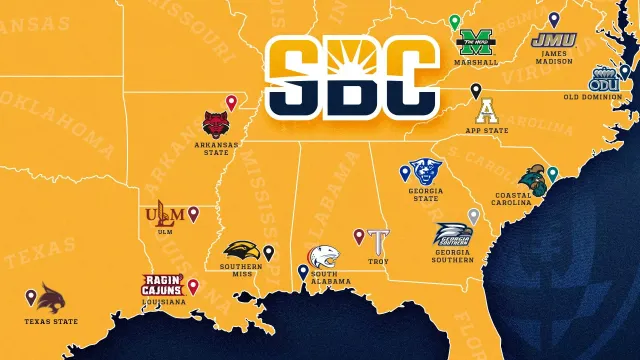
By this time in very early March, all Sun Belt Conference teams, including Louisiana and ULM, are usually made aware of their upcoming season's full football schedule. The Sun Belt typically has its football schedule out by March 1st, allowing teams and supporters alike to find out who, where, and when they will play come football season.
This year, however, things are looking a little different, as we may not see a definite 2026 Sun Belt football schedule for a few more weeks, if not months. How much sooner we will get it all falls in the hands of the outcome of an ongoing lawsuit.
As you might recall, Texas State officially announced that they would leave the Sun Belt for the Pac-12 on June 30, 2025, a move that would take place on July 1, 2026. This meant that the 2025-2026 athletic year was Texas State's final journey in the SBC. When it's all said and done, this means that the conference would need to find a new 14th member to avoid dropping to 13 members come the 2026-2027 athletic year.
A couple of weeks later, the conference officially announced on July 15, 2025, that Louisiana Tech would be filling the void left by Texas State. The problem to be determined, however, was whether LA Tech would be able to join in 2026 or 2027. Joining in 2026 would make this an easy transition for the SBC, keeping them at 14 members with no gaps. But a delay to 2027 would mean the conference gets stuck at 13 teams for the 2026-2027 athletic year, and right now, the there is a potential that this could be the case. Louisiana Tech, of course, wants to get this move done sooner rather than later.
So, the school wants to join in 2026, and the Sun Belt doesn't suffer a gap year. A win-win for both, so what's the hold up?
Not too long after the announcements went public, Conference USA, the conference in which LA Tech has been a member of since 2013, filed a lawsuit against the University of Louisiana System (which oversees Louisiana Tech). They accused the school and the system of violating Louisiana public records tied to the school leaving for the Sun Belt Conference. CUSA claims that a letter written on May 27, 2025, by Louisiana Tech President Jim Henderson, which referenced the school's move to the Sun Belt, suggested LA Tech made the decision to leave the CUSA earlier than its official notice on July 14th, which came after the conference's June 27 revenue distribution. Under Conference USA bylaws, schools that notify withdrawal after the payout can keep that year's (2025-2026) distribution but must forfeit the next two.
However, the actual timeline challenges this claim, suggesting the date of the letter was incorrect by clerical error. As mentioned above, the Sun Belt's void that Louisiana Tech ended up filling did not actually exist until June 30th when Texas State officially announced its departure, and SBC officials didn't vote on the move to bring in Louisiana Tech until mid-July, after which they sent a formal invitation for the school to join. Thus, there is no logical explanation as to why Louisiana Tech would have a letter written in May about the school moving over to the Sun Belt.
CUSA also accused the school of improperly withholding documents from an August public records, though the school had already provided major materials including the Sun Belt agreement. Louisiana Tech University has denied any wrongdoing, stating that they have complied with both conference bylaws and state law.
With the lawsuit still ongoing and a timeline not established, it has put the Sun Belt Conference and its teams in a bind, and could mean waiting a few more weeks, if not months, until seeing a definite finalized schedule. While the conference could put out a schedule which either does or does not include Louisiana Tech, it does not want to take the risk of having to change it all up if the result of the lawsuit changes those plans. Even if the Sun Belt were to release a schedule now, it would not be definite until the lawsuit is over and an outcome is obtained.
It is also important to keep in mind that the Sun Belt Conference is the last remaining Division-I conference with divisions. With the conference currently (including Texas State) at 14 members, it has them separated equally into two geographical East/West divisions. With Texas State's departure bringing the West down to 6 teams, Louisiana Tech is supposed to be the filler to that. But the conference could be forced to ditch the unique divisional setup if Louisiana Tech cannot join in 2026, as the conference would be at an odd number of teams. The Sun Belt currently utilizes the East/West divisional setup to determine who makes the Sun Belt Conference Championship, with the winner of each division taking the honors of doing so.
Other conferences like the Mid-American Conference and Mountain West Conference are also facing similar delayed schedule releasing situations due to conference realignments, but the Sun Belt Conference (and Conference USA) are the two where uncertainty still boils.
For now, our three Louisiana schools (Louisiana Ragin' Cajuns, ULM Warhawks, and Louisiana Tech Bulldogs) will have to wait a little longer to find out their 12-game schedule for the 2026 football season.
A quick share helps us a lot!
This Facebook widget is no longer supported.
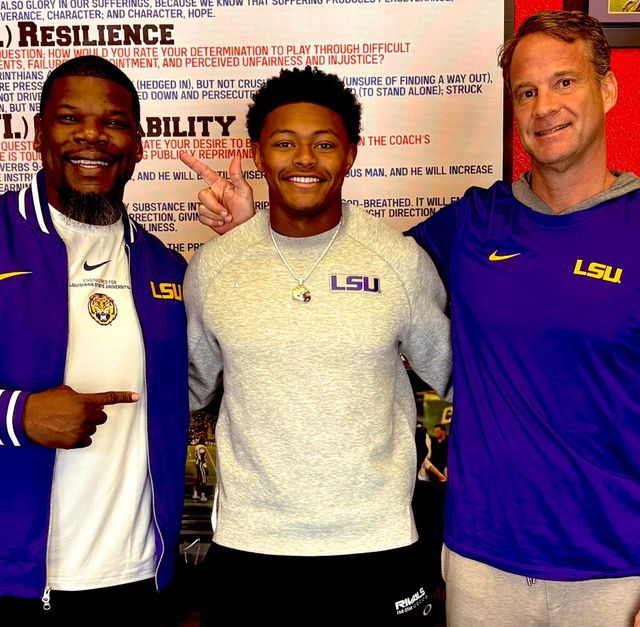
LSU has made it clear that five-star wide receiver Easton Royal remains one of its top priorities in the 2027 recruiting class. Although Royal is currently committed to Texas, LSU has continued to recruit him aggressively. Based on recent recruiting events and public reporting, one factor that could strengthen the Tigers' position is the presence of quarterback commit Peyton "Pop" Houston. While no outcome is guaranteed in recruiting, Houston's relationship with Royal has become one of the more intriguing storylines surrounding LSU's 2027 class. According to recruiting coverage from The Opening and reports from And The Valley Shook, Houston and Royal showcased noticeable chemistry while competing together on the national stage. Houston also drew attention by winning the event's longest throw competition with a reported 67-yard throw, further reinforcing why many evaluators consider him one of the premier quarterback prospects in the 2027 class. In my view, Houston has the potential to become much more than another highly rated offensive commitment. Elite quarterbacks often become magnets for other top recruits, and early signs suggest Houston could have that kind of influence on LSU's 2027 recruiting class. Why Houston Matters in Royal's Recruitment Quarterback and wide receiver relationships have become one of the most influential factors in modern recruiting. Elite receivers aren't simply choosing a school—they're choosing an offense, a coaching staff, and perhaps most importantly, the quarterback who will help maximize their abilities. If Royal ultimately views Houston as LSU's quarterback of the future, it gives the Tigers another compelling selling point. Rather than asking Royal to imagine what the offense could become, LSU can point to chemistry that has already been displayed during national recruiting events. That doesn't guarantee a commitment flip, but it does provide LSU with something tangible that few recruiting pitches can offer: an established connection between two elite prospects. LSU's History Shows Why This Matters LSU's greatest offensive seasons have consistently featured elite quarterbacks throwing to elite receivers. During the Tigers' historic 2019 National Championship season, Joe Burrow captured the Heisman Trophy while throwing to arguably the greatest receiving corps in college football history—Ja'Marr Chase, Justin Jefferson, and Terrace Marshall Jr. That offense rewrote NCAA record books and remains the standard for modern college football offenses. A few years later, history repeated itself. Jayden Daniels won the 2023 Heisman Trophy while benefiting from one of the nation's most explosive receiving duos in Malik Nabers and Brian Thomas Jr. Daniels' remarkable development was certainly his own, but LSU's elite receiving talent allowed the offense to reach another level. The lesson is clear: great quarterbacks elevate receivers, but elite receivers also help quarterbacks reach championship-level production. That history gives LSU a compelling message for recruits considering Baton Rouge. Peyton "Pop" Houston's Development Houston's rise as one of Louisiana's premier quarterback prospects is backed by more than recruiting rankings. Evaluators consistently praise his arm strength, touch, ability to extend plays outside the pocket, and willingness to attack defenses vertically. His continued development at Evangel Christian Academy has made him one of the foundation pieces of LSU's 2027 recruiting class. The Bigger Picture If LSU eventually pairs Peyton Houston with Easton Royal, it would represent much more than another recruiting victory. It would signal that LSU landed a quarterback capable of attracting elite talent around him while adding a receiver willing to build alongside that vision. Programs that consistently compete for championships often see recruiting momentum build this way. Elite quarterbacks attract receivers. Elite receivers attract additional offensive talent. Once that cycle begins, recruiting classes can quickly become special. None of this guarantees that Easton Royal will flip his commitment. Texas remains in a strong position, and recruiting decisions can change for countless reasons. However, Houston's emergence gives LSU something every elite program hopes to have: a quarterback capable of becoming the centerpiece of an entire recruiting class. LSU has already witnessed what happens when championship-caliber quarterbacks are paired with elite receivers. Joe Burrow won the Heisman Trophy. Jayden Daniels won the Heisman Trophy. If Peyton "Pop" Houston eventually helps bring Easton Royal to Baton Rouge, it could become one of the defining recruiting stories of LSU's 2027 class—and perhaps the first step toward building another explosive Tiger offense.

The tight end room has some fresh blood and they look poised to be more impactful heading into next season. With the new arrivals of Noah Fant and third round draft pick Oscar Delp the offense will have the ability to play more in multiple tight end sets to create mismatches for the defense. Multiple tight end sets should allow the Saints to improve the run game and conversely the play action game. Playing in tight end heavy sets was something they were unable to do more of last year due to injuries and lack of talent at the tight end position. Mainstay and the only returning starting caliber player is Juwan Johnson. Johnson had a good year last year as one of the few reliable targets in the passing game aside from Chris Olave. Johnson is looking to build on a solid year where he had 77 receptions for 889 receiving yards with 3 touchdowns. He was a security blanket when Rattler was starting and had quite a few big plays when Shough took over as the starting quarterback. With Shough coming into the season as the presumed starter I expect their connection to be even better next season. Someone hoping to have a better connection with a new QB is Noah Fant. Fant was a first round pick back in 2019 with the Broncos but has never quite lived up to his draft status. Fant will be playing on his third team in three years as he seeks to be a quality rotational piece in the offense and find stability for his career here in New Orleans. Fant should be utilized more in the passing game than in the running game but should be able to hold his own when called upon to do his part on run downs. Fant has been on a statistical decline since his time with Denver as his best receiving season came in at 68/670/4 back in 2021. Although his stats have been declining Fant still has plenty to offer with his athleticism and should produce more given a better opportunity. After Fant in the depth chart should be Oscar Delp who could be the x-factor of the tight end room after being selected in the third round of the draft this year. Delp brings a versatile option to the offense as he can lineup in various spots and handle the rigors of blocking in the run game. Delp’s calling card in college was his elite athleticism which jumps off the screen when you watch his tape. He has the ability to turn a five yard catch into an explosive play with how quickly he can get to top speed. Delp is an adequate, willing blocker where like most new tight ends in the league has room to improve in the blocking area of his game. With his versatility and athleticism I believe Delp will play a pivotal role in the offense this upcoming season. With Delp presumed to round out the depth chart at tight end the remaining tight ends will be competing for spots on the practice squad or spots on another team. This group includes Cody Hardy, Treyton Welch, Moliki Matavao, and Zaire Mitchell-Paden. We’ve seen Welch and Matavao from last season fill in admirably after some injuries but are best served as bench options at this point in time in their development. This group of roster hopefuls should hopefully provide some good competition from one another as we progress through training camp and preseason here shortly. Overall this group has a lot more promise heading into this season as it did last year. By getting younger and more athletic the tight ends will play a more prominent role in Kellen Moore’s offense. Whether it’s Juwan building on last season or Fant having a bounce back year or Delp proving to be revelation, the team is going to have plenty of options to choose from to attack the defense. Exactly what this team needed after not having enough last season.