LSU's Hearbeat of Bayou Culture Returns
Zach Nuñez • May 22, 2026

Lane Kiffin sat in his office with Big Cat and PFT Commenter for Pardon My Take’s annual Grit Week series.

PFT jokingly asked Kiffin, “Have you gotten to meet and know Mike the Tiger yet?”


Kiffin briefly explained trying to have “a moment” with Mike before the conversation quickly pivoted.


“That is really why we need Coach O,” Kiffin said.


Kiffin’s lighthearted attempt to connect with Mike the Tiger landed because it pointed to something real: LSU had lost a piece of its soul. Mike is more than a mascot. He’s the living symbol of the program’s unique Bayou culture, the unmistakable cultural heartbeat Ed Orgeron once brought every day with his “one team, one heartbeat” energy that made the program feel truly alive.


Say what you want about the way things ended between 2020 and 2021. Based on sourced information I won’t get into here, I’d argue much of the public perception surrounding Orgeron’s exit misses the full picture. Binder in hand, Orgeron built the greatest team in college football history, an achievement that never seemed fully appreciated by LSU’s leadership at the time.


Brian Kelly was brought in to “steady the ship.” In some ways, he did. LSU remained competitive and relevant nationally. But in other ways, Kelly’s tenure slowly chipped away at the culture and identity that made LSU football unique.


Over four seasons, Kelly often said the right things publicly, but in true politician form, his actions rarely matched his words. The result was a gradual erosion of the program’s identity and growing apathy within a fan base that prides itself on passion and pride. Eventually, that disconnect led to Kelly’s reported $54 million exit from Baton Rouge.


In a separate Grit Week interview, Orgeron was blunt about why that disconnect happened. When asked about Kelly’s infamous first appearance on the basketball court, Coach O didn’t hesitate: “It’s over, he ain’t got a chance. If you try to be somebody you ain’t, they are going to smell it from a mile away.”


It felt fitting that Frank Wilson stepped in as interim head coach, describing the opportunity as “answering the call of Mother University.”


Wilson understood what LSU was supposed to be because he lived it, as a Louisiana native and as a longtime assistant deeply embedded in the fabric of the program. That is not to diminish the work he did during his second stint at LSU, but at times Wilson felt like a bridge to the culture Kelly never fully embraced. He helped keep the program tethered to its Louisiana roots while Kelly attempted to reshape LSU in his own political and calculated image.


When Wilson later departed for Ole Miss and LSU hired Kevin Smith to coach running backs, Kiffin, general manager Billy Glasscock, and the rest of the staff did an admirable job holding together the recruiting class and stabilizing the roster. Orgeron alluded to assisting with this by speaking to families of recruits around signing day, pulling them back to the program they always wanted.


Still, something was missing.


This is not to suggest LSU lacked coaches with Louisiana ties, but the program lacked a singular embodiment of its identity. It lacked the unmistakable face of Bayou culture.


It lacked Ed Orgeron.


Orgeron understood the deep pull better than most. He added that 99 percent of players born in Louisiana at some point dreamed of running through those H-style goal posts in Tiger Stadium and becoming a Tiger. “You just have to recapture it.”


In that same interview, Orgeron laid out exactly what he brings back to Baton Rouge. “It’s an energy you just can’t match at other places,” he said of LSU. He recounted the advice he gave Kiffin: “That’s what I told Lane, ‘Recruit them.’ They’re going to be there for you through thick and thin. The guy before (you) didn’t do it. You cannot disassociate yourself with these people because this is their life.”


Coach O knows that truth because he was born with it. “I was raised in the state of Louisiana,” he said. “Nobody ever had to tell me about the expectations at LSU. I got it.”


That’s the culture he’s always understood: “That’s what makes this state, the people. They don’t come here to see the mosquitoes, the humidity and the alligators, it’s because of the people and the culture… LSU makes the state of Louisiana and everybody loves the LSU Tigers.”


Kiffin needs someone who can immediately strengthen relationships between a largely new staff and high school coaches across Louisiana. In an era dominated by transfer portal mercenaries and transactional roster building, LSU also needs someone capable of reigniting genuine passion inside the building.


That is what Orgeron brings.


He is a motivator. A recruiter. A culture builder. A general who has stood on the front lines in Death Valley and experienced LSU at both its highest highs and its lowest lows.


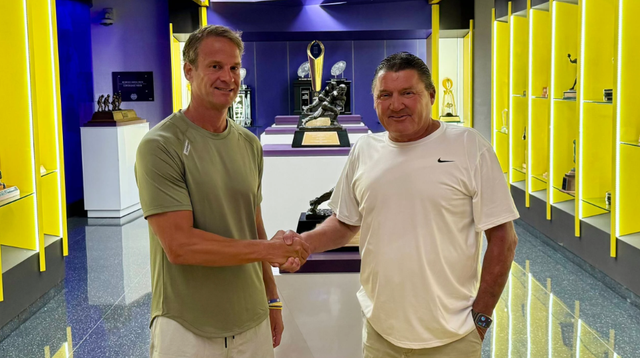
Now, as special assistant to recruiting and defense, Orgeron returns without the burdens that come with being a head coach. No administrative distractions. No CEO responsibilities.


Instead, he can focus entirely on the qualities that made him so valuable in the first place: relationships, energy, intensity, and a forever love for LSU.


Follow Zach Nuñez On X.

A quick share helps us a lot!

This Facebook widget is no longer supported.
By Auston Taylor July 8, 2026
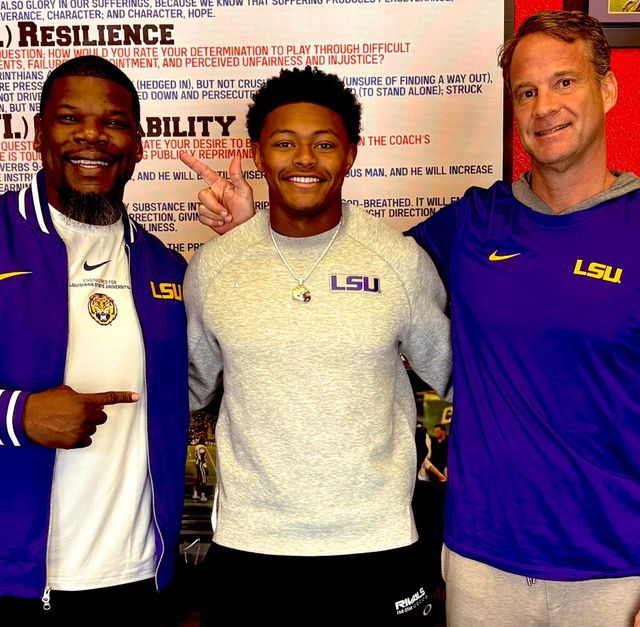
 LSU has made it clear that five-star wide receiver Easton Royal remains one of its top priorities in the 2027 recruiting class. Although Royal is currently committed to Texas, LSU has continued to recruit him aggressively. Based on recent recruiting events and public reporting, one factor that could strengthen the Tigers' position is the presence of quarterback commit Peyton "Pop" Houston. While no outcome is guaranteed in recruiting, Houston's relationship with Royal has become one of the more intriguing storylines surrounding LSU's 2027 class. According to recruiting coverage from The Opening and reports from And The Valley Shook, Houston and Royal showcased noticeable chemistry while competing together on the national stage. Houston also drew attention by winning the event's longest throw competition with a reported 67-yard throw, further reinforcing why many evaluators consider him one of the premier quarterback prospects in the 2027 class. In my view, Houston has the potential to become much more than another highly rated offensive commitment. Elite quarterbacks often become magnets for other top recruits, and early signs suggest Houston could have that kind of influence on LSU's 2027 recruiting class. Why Houston Matters in Royal's Recruitment Quarterback and wide receiver relationships have become one of the most influential factors in modern recruiting. Elite receivers aren't simply choosing a school—they're choosing an offense, a coaching staff, and perhaps most importantly, the quarterback who will help maximize their abilities. If Royal ultimately views Houston as LSU's quarterback of the future, it gives the Tigers another compelling selling point. Rather than asking Royal to imagine what the offense could become, LSU can point to chemistry that has already been displayed during national recruiting events. That doesn't guarantee a commitment flip, but it does provide LSU with something tangible that few recruiting pitches can offer: an established connection between two elite prospects. LSU's History Shows Why This Matters LSU's greatest offensive seasons have consistently featured elite quarterbacks throwing to elite receivers. During the Tigers' historic 2019 National Championship season, Joe Burrow captured the Heisman Trophy while throwing to arguably the greatest receiving corps in college football history—Ja'Marr Chase, Justin Jefferson, and Terrace Marshall Jr. That offense rewrote NCAA record books and remains the standard for modern college football offenses. A few years later, history repeated itself. Jayden Daniels won the 2023 Heisman Trophy while benefiting from one of the nation's most explosive receiving duos in Malik Nabers and Brian Thomas Jr. Daniels' remarkable development was certainly his own, but LSU's elite receiving talent allowed the offense to reach another level. The lesson is clear: great quarterbacks elevate receivers, but elite receivers also help quarterbacks reach championship-level production. That history gives LSU a compelling message for recruits considering Baton Rouge. Peyton "Pop" Houston's Development Houston's rise as one of Louisiana's premier quarterback prospects is backed by more than recruiting rankings. Evaluators consistently praise his arm strength, touch, ability to extend plays outside the pocket, and willingness to attack defenses vertically. His continued development at Evangel Christian Academy has made him one of the foundation pieces of LSU's 2027 recruiting class. The Bigger Picture If LSU eventually pairs Peyton Houston with Easton Royal, it would represent much more than another recruiting victory. It would signal that LSU landed a quarterback capable of attracting elite talent around him while adding a receiver willing to build alongside that vision. Programs that consistently compete for championships often see recruiting momentum build this way. Elite quarterbacks attract receivers. Elite receivers attract additional offensive talent. Once that cycle begins, recruiting classes can quickly become special. None of this guarantees that Easton Royal will flip his commitment. Texas remains in a strong position, and recruiting decisions can change for countless reasons. However, Houston's emergence gives LSU something every elite program hopes to have: a quarterback capable of becoming the centerpiece of an entire recruiting class. LSU has already witnessed what happens when championship-caliber quarterbacks are paired with elite receivers. Joe Burrow won the Heisman Trophy. Jayden Daniels won the Heisman Trophy. If Peyton "Pop" Houston eventually helps bring Easton Royal to Baton Rouge, it could become one of the defining recruiting stories of LSU's 2027 class—and perhaps the first step toward building another explosive Tiger offense.
By Kaden Arkeder July 4, 2026
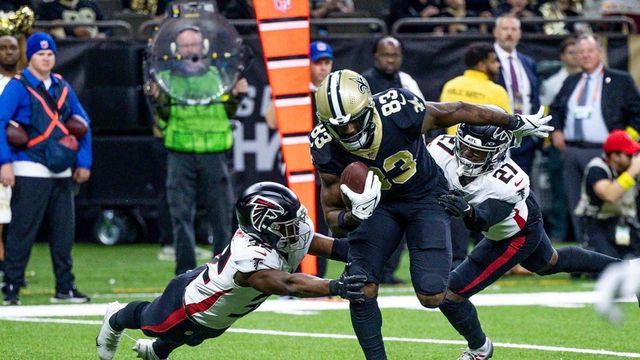
The tight end room has some fresh blood and they look poised to be more impactful heading into next season. With the new arrivals of Noah Fant and third round draft pick Oscar Delp the offense will have the ability to play more in multiple tight end sets to create mismatches for the defense. Multiple tight end sets should allow the Saints to improve the run game and conversely the play action game. Playing in tight end heavy sets was something they were unable to do more of last year due to injuries and lack of talent at the tight end position. Mainstay and the only returning starting caliber player is Juwan Johnson. Johnson had a good year last year as one of the few reliable targets in the passing game aside from Chris Olave. Johnson is looking to build on a solid year where he had 77 receptions for 889 receiving yards with 3 touchdowns. He was a security blanket when Rattler was starting and had quite a few big plays when Shough took over as the starting quarterback. With Shough coming into the season as the presumed starter I expect their connection to be even better next season. Someone hoping to have a better connection with a new QB is Noah Fant. Fant was a first round pick back in 2019 with the Broncos but has never quite lived up to his draft status. Fant will be playing on his third team in three years as he seeks to be a quality rotational piece in the offense and find stability for his career here in New Orleans. Fant should be utilized more in the passing game than in the running game but should be able to hold his own when called upon to do his part on run downs. Fant has been on a statistical decline since his time with Denver as his best receiving season came in at 68/670/4 back in 2021. Although his stats have been declining Fant still has plenty to offer with his athleticism and should produce more given a better opportunity. After Fant in the depth chart should be Oscar Delp who could be the x-factor of the tight end room after being selected in the third round of the draft this year. Delp brings a versatile option to the offense as he can lineup in various spots and handle the rigors of blocking in the run game. Delp’s calling card in college was his elite athleticism which jumps off the screen when you watch his tape. He has the ability to turn a five yard catch into an explosive play with how quickly he can get to top speed. Delp is an adequate, willing blocker where like most new tight ends in the league has room to improve in the blocking area of his game. With his versatility and athleticism I believe Delp will play a pivotal role in the offense this upcoming season. With Delp presumed to round out the depth chart at tight end the remaining tight ends will be competing for spots on the practice squad or spots on another team. This group includes Cody Hardy, Treyton Welch, Moliki Matavao, and Zaire Mitchell-Paden. We’ve seen Welch and Matavao from last season fill in admirably after some injuries but are best served as bench options at this point in time in their development. This group of roster hopefuls should hopefully provide some good competition from one another as we progress through training camp and preseason here shortly. Overall this group has a lot more promise heading into this season as it did last year. By getting younger and more athletic the tight ends will play a more prominent role in Kellen Moore’s offense. Whether it’s Juwan building on last season or Fant having a bounce back year or Delp proving to be revelation, the team is going to have plenty of options to choose from to attack the defense. Exactly what this team needed after not having enough last season.
Show More