
Ole Miss Takes First Two, Including Run Rule Over LSU
David Billiot Jr • April 12, 2026
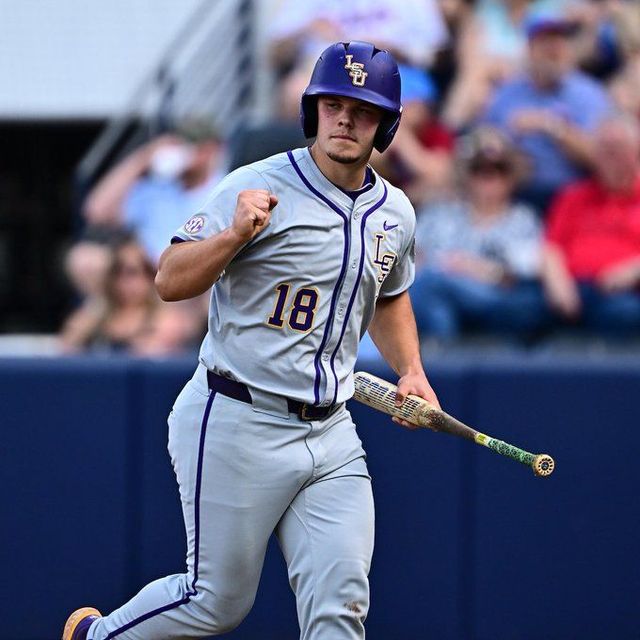
Ugly. Brutal. Lifeless. Just three words that can describe the first two games of the series for LSU. Despite taking a 2-0 lead in both games, they’ve held the lead in only 5 of the 18 innings so far in Oxford. As it has been all year, their issue is the inability to stop the train from going completely off of the tracks. When one thing goes wrong, it’s typically followed with another wrong…or four. While pitching has been great for the past three weeks of SEC play, it was the hitting or defense that let them down. This weekend, all three aspects have been flat out putrid. Outside of Casan Evans, almost every pitcher that has taken the mound for the Tigers has struggled to get outs. Although it wasn’t always on the pitcher like in Zac Cowan’s case, it’s been nothing but bad for the most part. Bad can’t even describe the defense. The better word for that is atrocious.
Speaking of atrocious, that’s also a good way to describe LSU’s situational hitting. No matter what the situation is, if it’s a key moment, the Tigers simply can not find a big swing. They have been incapable of stringing together multiple hits on a consistent basis. Even if you go back through the back-to-back series wins over Kentucky and Tennessee, almost all of the big moments have come off of homeruns. Game 3 against Kentucky, John Pearson’s grand slam and Seth Dardar’s 3-run homerun were what flipped that game on it’s head. Game 1 against Tennessee, it took a trio of walks from one of the best Volunteer pitchers to lead to the grand slam by Derek Curiel. On Sunday, it was a bunch of solo homeruns and then the grand slam by Cade Arrambide until the dam finally broke loose for the Tiger offense in extra innings. They have just failed game after game of being able to score runs with simple base hits. Homeruns are great, but when they don’t come, the production looks a lot like it has on Friday and Saturday against Ole Miss.
Game 1 (Ole Miss – 6, LSU – 3)
Pitching
As good as Casan Evans has been at times this year, his starts are rarely clean from start to finish. The next step in his progression is avoiding a big inning every time out. Even if it only ends up being 2 or 3 runs, he’s prone to a 30+ pitch inning from time to time and it limits his ability to get even deeper in to games. This week, it was the first inning. After Jake Brown’s 2-run homerun gave LSU an immediate lead, Ole Miss answered right back by stringing together four singles in the first six batters of the game. Just like that, the game was tied at 2-2. Evans was able to strike out the final two hitters of the 1st. He gave up a leadoff homerun to start the 2nd, but that’s where he finally started to settle in. After a ground out, he struck out the final two hitters for the second time in a row, but his pitch count was already at 55. To start the 3rd, Evans issued a leadoff walk, but a beautifully turned double play by Steven Milam and Seth Dardar quickly erased it, followed by a 1-pitch lineout to left field. He cruised through the 4th and 5th innings by going 6-up, 6-down, including 3 strikeouts. After a 1-out hit by pitch, LSU’s ace was able to record his 9th and final strikeout, followed by a groundout to end the 6th and close his outing. As he did against Kentucky two weeks ago, he battled through a tough start to stretch through 6 innings of work and save what would have been disastrous if Jay Johnson had to go to his bullpen any earlier, especially considering Sundays are a bullpen game with Cooper Moore out. Evans did what he always does and battled.
- Final line: 6.0 IP / 5 hits / 3 runs / 9 Ks / 2 BBs / 107 pitches (63 strikes, 59%)
After LSU tied the game at 3-3 in the top of the 7th, Jay pulled the trigger on bringing Zac Cowan in. The senior has been the best pitcher on the staff in SEC play, so the hope was to allow him to close out the game while his offense grabbed a lead. After a quick 1-2-3 inning, the plan was moving along swimmingly. But, some horrendous defense and mental mistakes on the infield led to Jay’s worst nightmare. Using Cowan in a losing effort would be catastrophic and that’s exactly what happened. A ball off of the end of the bat would drop in to right field with the bases loaded and no outs, giving Ole Miss the one run lead. A squeeze attempt would follow, in which more bad defense prevented the Tigers from getting a single out. A sacrifice fly immediately followed and just like that, the Rebels were up 6-3. With 32 pitches, Jay would come out to get Cowan with the hopes of some preservation for Sunday. Cowan executed pitch after pitch, but was severely let down by the rest of his team.
- Final line: 1.2 IP / 4 hits / 3 runs (1 earned) / 1 K / 0 BB / 32 pitches (21 strikes, 66%)
Connor Benge came in to record a strikeout to end the 8th and that would be all, as the Rebels wouldn’t hit in the 9th.
- Final line: 0.1 IP / 0 hits / 0 runs / 1 K / 0 BB / 3 pitches (3 strikes, 100%)
Hitting
Mason Braun made his first SEC start at 1st base and delivered, for the most part. I say “for the most part”, because his third and final hit of the game led off in the 8th inning when the game was still tied, but he got caught napping with his lead off of 1st base and got picked off. It was an inexcusable freshman mistake, but that was his only blemish. He went 3-4, including a double, with all of his hits coming off of top conference left-handed arms. His defense at 1st base also looked good, including a great stretch on the double play ball.
Omar Serna returned from his injury last Sunday in Knoxville and delivered. He finished 2-4.
Chris Stanfield moved back up to the leadoff spot and delivered great at bats all night. While he finished 1-3 with a run scored, he also walked twice and was one of the few Tigers that was competitive on a night in which LSU struck out 11 times.
The biggest swing of the night was the one from Jake Brown when he launched a 2-run bomb in to the Ole Miss student section in the 1st inning. The rest of his night was subpar, though, finishing 1-5 with those 2 RBI and his run scored.
Game 2 (Ole Miss – 12, LSU – 2)
Pitching
William Schmidt looked fantastic early, striking out both Bissetta and Utermark in the 1st on some nasty pitches. He walked two in the 2nd, but struck out the side to prevent anything from happening. The sophomore got right back to dealing in the 3rd, striking out another two. Through 3 innings, he had already racked up 7 strikeouts. Schmidt hit a brick wall in the 4th, though. After back-to-back walks and a couple of wild pitches to start the inning, Ole Miss was set up with runners on 1st and 3rd and no outs. A sacrifice fly would bring in a runner to make it a 2-1 game, but the Rebels had just scored a run without recording a single hit. After a groundout back to the pitcher, he finally gave up his first hit on a single that tied the game at 2-2. The very next batter blasted a 2-run homerun to left-center, followed up by a double, and in the blink of an eye, Schmidt’s day was one and the Tigers were down 4-2. Despite the fact that he was squeezed by the home plate umpire, he did a poor job of composing himself. He let his frustrations get to him and it affected his performance. Saturday will have to be a learning moment for Schmidt, especially with such a bright future.
- Final line: 3.2 IP / 3 hits / 4 runs / 7 Ks / 4 BBs / 85 pitches (50 strikes, 59%)
Cooper Williams entered the game with 2 outs in the 4th, but promptly walked the first batter he faced on 5 pitches. He was able to record a groundout on the next guy, preventing further damage and stranding two runners. His trouble would come in the 5th, though, as he gave up a single and hit a batter to start the inning. A single would drive home another run for Ole Miss to make it a 5-2 game. Williams would get a strikeout and a lineout, but that would be all for the sophomore. It’s been a frustrating season for the lefty, as he’s been unable to showcase the talent that was on display in 2025 as a true freshman.
- Final line: 1.0 IP / 2 hits / 1 run / 1 K / 1 BB / 28 pitches (14 strikes, 50%)
Zion Theophilus entered and struck out the final hitter in the 5th. He returned for the 6th, but a walk and single to start the inning would put runners on 1st and 3rd and that would be the end of his day. The freshman has flashed some promise, even as recent as Tuesday, but not on Saturday.
- Final line: 0.1 IP / 1 hit / 2 runs / 1 K / 1 BB / (11 pitches (6 strikes, 55%)
Danny Lachenmayer had been called upon three times in a span of four days between game 1 vs Kentucky and game 1 vs Tennessee over the past few weeks. In each of those appearances, he came in and did his job. It’s all been downhill since then, though. He entered on Saturday and immediately threw a wild pitch, scoring one. He then hit Bissetta, which now marks the third straight game going back to Sunday that he has come in and hit a batter and failed to record an out. That’s magnified when his singular role on this team is matchup specialist vs left handed hitters. Lachenmayer is likely out of favor with Jay Johnson at this point.
- Final line: 0.0 IP / 0 hits / 1 run / 0 K / 1 HBP / 6 pitches (3 strikes, 50%)
Connor Benge entered and only remained for one batter, as well. He executed a pretty good pitch and got a weak ground ball, but it somehow found it’s way through the left side of the infield, despite the shift.
- Final line: 0.0 IP / 1 hit / 1 run / 0 Ks / 0 BBs / 4 pitches (2 strikes, 50%)
It was Ethan Plog’s turn to take over as the fourth pitcher of the inning and LSU had yet to record an out. With runners on 2nd and 3rd, Will Furniss singled to drive home two more runs to make it 9-2. After a walk, the Tigers finally got their first out with a strikeout, which was followed by a groundout. A 2-out walk would load the bases and that’s where Plog’s day would end. After a pretty good stretch of appearances a few weeks ago, it has just not looked the same for the transfer LHP.
- Final line: 0.2 IP / 1 hit / 3 runs / 1 K / 2 BB / 23 pitches (10 strikes, 43%)
With the bases loaded and Ole Miss one swing away from putting themselves in position for the 10-run rule, Jay called upon Mavrick Rizy. He leads the team in appearances, but his performances have been subpar recently, which is why a guy like him that has been called upon in massive moments was being brought in down 7 runs. Not only was it eye-opening because Rizy was being used with the deficit, but when you factor in that tomorrow is going to be a bullpen game and LSU will need all hands on deck, the decision to bring him in shows that the staff’s trust level has dropped with the big sophomore. The pattern would continue, as Paino lined a double to left-center, clearing the bases and pushing the Rebels lead to 12-2. A lineout would mercifully end the inning. Typically, Rizy’s issue is not being able to throw strikes and issuing free passes, but that wasn’t the case on Saturday.
- Final line: 0.1 IP / 1 hit / 0 runs / 0 Ks / 0 BBs / 13 pitches (8 strikes, 62%)
Hitting
For the second straight day, Mason Braun was one of the only bright spots offensively. He brought his weekend hit count up to 5, by going 2-3 and scoring a run.
Steven Milam was the only other Tiger with multiple hits. His 1st inning double brought home the opening run of the game. He’d add a single later and finish 2-3 with the RBI.
The only other Tiger of note on the offensive side was Omar Serna, who finished 1-3 with a double. That was his second double of the weekend.
Up Next
LSU will look to salvage game 3 of the series on Sunday, as Ole Miss looks to bury them with a sweep. First pitch is for 1:30 pm central. Grant Fontenot is the scheduled starter for the Tigers and will likely get the ball, but keep in mind that Jay Johnson chose to start him last week after listing Gavin Guidry as starter. Guidry, Deven Sheerin, and Santiago Garcia will be available behind Fontenot, while completely fresh.
Ole Miss will send RHP Taylor Rabe to the mound for his 3rd start of the season. The redshirt sophomore enters with a record of 3-1 with a 3.20 ERA through 25.1 innings pitched. He has struck out 32 hitters this season with only 4 walks and holds a batting average against of .229.
Follow me on X for much more @DCBilliotJr
A quick share helps us a lot!
This Facebook widget is no longer supported.
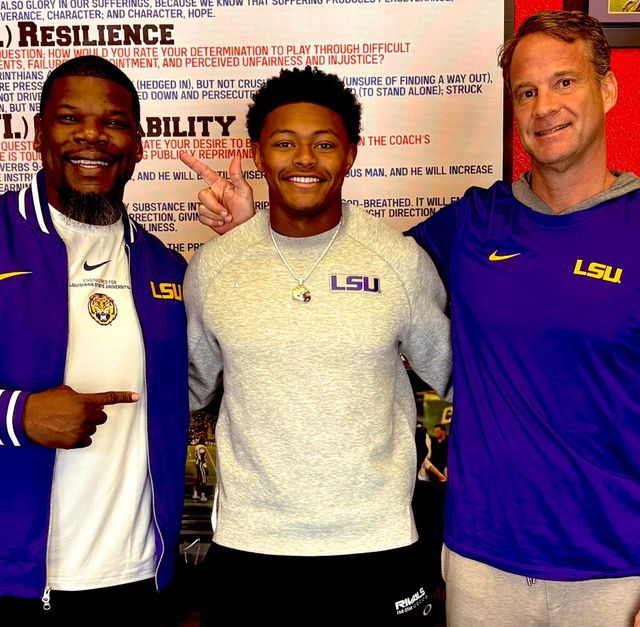
LSU has made it clear that five-star wide receiver Easton Royal remains one of its top priorities in the 2027 recruiting class. Although Royal is currently committed to Texas, LSU has continued to recruit him aggressively. Based on recent recruiting events and public reporting, one factor that could strengthen the Tigers' position is the presence of quarterback commit Peyton "Pop" Houston. While no outcome is guaranteed in recruiting, Houston's relationship with Royal has become one of the more intriguing storylines surrounding LSU's 2027 class. According to recruiting coverage from The Opening and reports from And The Valley Shook, Houston and Royal showcased noticeable chemistry while competing together on the national stage. Houston also drew attention by winning the event's longest throw competition with a reported 67-yard throw, further reinforcing why many evaluators consider him one of the premier quarterback prospects in the 2027 class. In my view, Houston has the potential to become much more than another highly rated offensive commitment. Elite quarterbacks often become magnets for other top recruits, and early signs suggest Houston could have that kind of influence on LSU's 2027 recruiting class. Why Houston Matters in Royal's Recruitment Quarterback and wide receiver relationships have become one of the most influential factors in modern recruiting. Elite receivers aren't simply choosing a school—they're choosing an offense, a coaching staff, and perhaps most importantly, the quarterback who will help maximize their abilities. If Royal ultimately views Houston as LSU's quarterback of the future, it gives the Tigers another compelling selling point. Rather than asking Royal to imagine what the offense could become, LSU can point to chemistry that has already been displayed during national recruiting events. That doesn't guarantee a commitment flip, but it does provide LSU with something tangible that few recruiting pitches can offer: an established connection between two elite prospects. LSU's History Shows Why This Matters LSU's greatest offensive seasons have consistently featured elite quarterbacks throwing to elite receivers. During the Tigers' historic 2019 National Championship season, Joe Burrow captured the Heisman Trophy while throwing to arguably the greatest receiving corps in college football history—Ja'Marr Chase, Justin Jefferson, and Terrace Marshall Jr. That offense rewrote NCAA record books and remains the standard for modern college football offenses. A few years later, history repeated itself. Jayden Daniels won the 2023 Heisman Trophy while benefiting from one of the nation's most explosive receiving duos in Malik Nabers and Brian Thomas Jr. Daniels' remarkable development was certainly his own, but LSU's elite receiving talent allowed the offense to reach another level. The lesson is clear: great quarterbacks elevate receivers, but elite receivers also help quarterbacks reach championship-level production. That history gives LSU a compelling message for recruits considering Baton Rouge. Peyton "Pop" Houston's Development Houston's rise as one of Louisiana's premier quarterback prospects is backed by more than recruiting rankings. Evaluators consistently praise his arm strength, touch, ability to extend plays outside the pocket, and willingness to attack defenses vertically. His continued development at Evangel Christian Academy has made him one of the foundation pieces of LSU's 2027 recruiting class. The Bigger Picture If LSU eventually pairs Peyton Houston with Easton Royal, it would represent much more than another recruiting victory. It would signal that LSU landed a quarterback capable of attracting elite talent around him while adding a receiver willing to build alongside that vision. Programs that consistently compete for championships often see recruiting momentum build this way. Elite quarterbacks attract receivers. Elite receivers attract additional offensive talent. Once that cycle begins, recruiting classes can quickly become special. None of this guarantees that Easton Royal will flip his commitment. Texas remains in a strong position, and recruiting decisions can change for countless reasons. However, Houston's emergence gives LSU something every elite program hopes to have: a quarterback capable of becoming the centerpiece of an entire recruiting class. LSU has already witnessed what happens when championship-caliber quarterbacks are paired with elite receivers. Joe Burrow won the Heisman Trophy. Jayden Daniels won the Heisman Trophy. If Peyton "Pop" Houston eventually helps bring Easton Royal to Baton Rouge, it could become one of the defining recruiting stories of LSU's 2027 class—and perhaps the first step toward building another explosive Tiger offense.
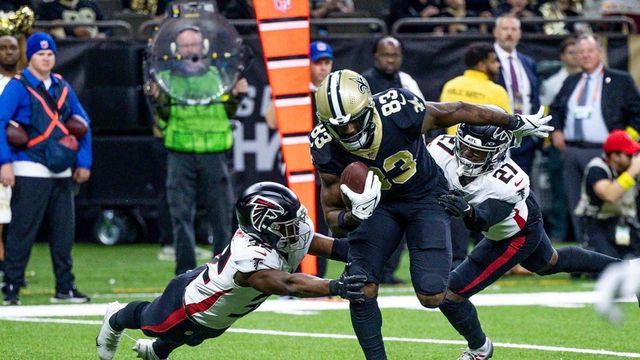
The tight end room has some fresh blood and they look poised to be more impactful heading into next season. With the new arrivals of Noah Fant and third round draft pick Oscar Delp the offense will have the ability to play more in multiple tight end sets to create mismatches for the defense. Multiple tight end sets should allow the Saints to improve the run game and conversely the play action game. Playing in tight end heavy sets was something they were unable to do more of last year due to injuries and lack of talent at the tight end position. Mainstay and the only returning starting caliber player is Juwan Johnson. Johnson had a good year last year as one of the few reliable targets in the passing game aside from Chris Olave. Johnson is looking to build on a solid year where he had 77 receptions for 889 receiving yards with 3 touchdowns. He was a security blanket when Rattler was starting and had quite a few big plays when Shough took over as the starting quarterback. With Shough coming into the season as the presumed starter I expect their connection to be even better next season. Someone hoping to have a better connection with a new QB is Noah Fant. Fant was a first round pick back in 2019 with the Broncos but has never quite lived up to his draft status. Fant will be playing on his third team in three years as he seeks to be a quality rotational piece in the offense and find stability for his career here in New Orleans. Fant should be utilized more in the passing game than in the running game but should be able to hold his own when called upon to do his part on run downs. Fant has been on a statistical decline since his time with Denver as his best receiving season came in at 68/670/4 back in 2021. Although his stats have been declining Fant still has plenty to offer with his athleticism and should produce more given a better opportunity. After Fant in the depth chart should be Oscar Delp who could be the x-factor of the tight end room after being selected in the third round of the draft this year. Delp brings a versatile option to the offense as he can lineup in various spots and handle the rigors of blocking in the run game. Delp’s calling card in college was his elite athleticism which jumps off the screen when you watch his tape. He has the ability to turn a five yard catch into an explosive play with how quickly he can get to top speed. Delp is an adequate, willing blocker where like most new tight ends in the league has room to improve in the blocking area of his game. With his versatility and athleticism I believe Delp will play a pivotal role in the offense this upcoming season. With Delp presumed to round out the depth chart at tight end the remaining tight ends will be competing for spots on the practice squad or spots on another team. This group includes Cody Hardy, Treyton Welch, Moliki Matavao, and Zaire Mitchell-Paden. We’ve seen Welch and Matavao from last season fill in admirably after some injuries but are best served as bench options at this point in time in their development. This group of roster hopefuls should hopefully provide some good competition from one another as we progress through training camp and preseason here shortly. Overall this group has a lot more promise heading into this season as it did last year. By getting younger and more athletic the tight ends will play a more prominent role in Kellen Moore’s offense. Whether it’s Juwan building on last season or Fant having a bounce back year or Delp proving to be revelation, the team is going to have plenty of options to choose from to attack the defense. Exactly what this team needed after not having enough last season.